
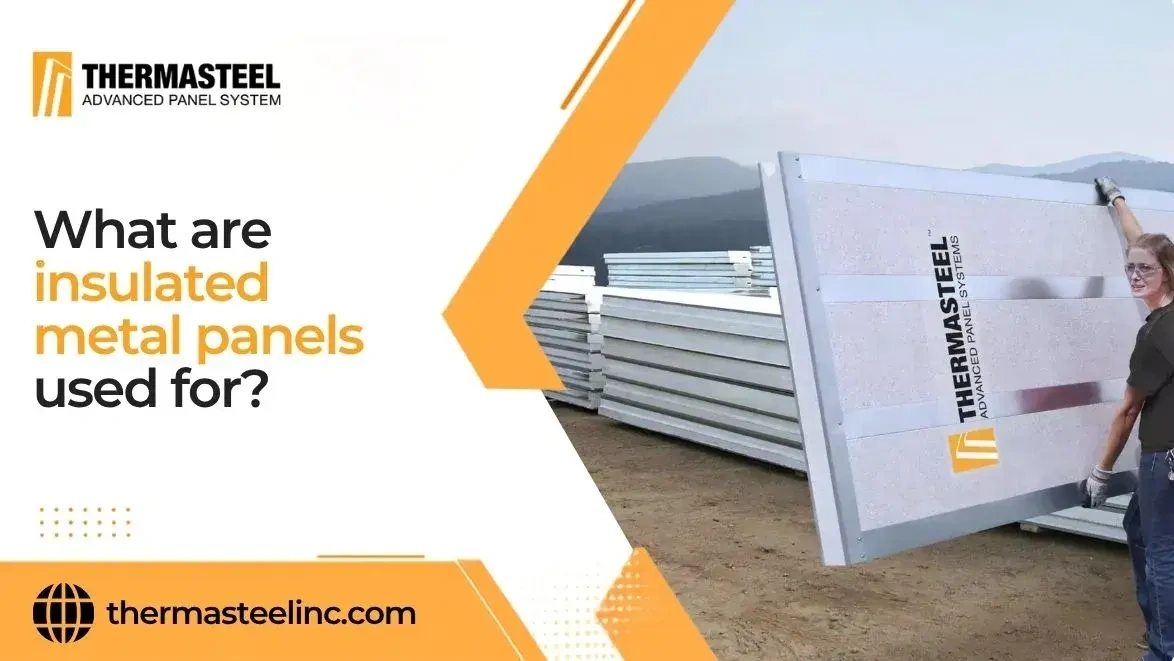
Insulated panels serve walls, partitions, cold storage, and industrial facilities. They combine insulation with durable metal surfaces inside factory-made assemblies. Builders often choose them for thermal control and efficient enclosure. Their metal facings also support weather resistance and lasting durability. However, the best system depends on climate and moisture exposure. Fire requirements, building use, and performance goals also shape selection.
Key Takeaways
|
What Are Insulated Metal Panels?
Insulated metal panels are factory-made sandwich assemblies containing an insulated core. That core sits between durable metal facings on both sides. Common core materials include polyurethane, polyisocyanurate, and mineral wool. Builders use IMPs for walls, roofs, partitions, and controlled environments. Their integrated construction can combine insulation with finished metal surfaces.
Some systems also support air, water, and vapor control. ThermaSteel uses light-gauge steel framing bonded to EPS instead. Designers should compare tested assemblies, joints, coatings, and code requirements.
Common Uses of Insulated Metal Panels
IMPs suit many building types because several enclosure functions work together. Their applications range from ordinary façades to specialized cold rooms.
Exterior Wall Systems
Exterior walls remain one of the most common IMP applications. Metal panels can combine cladding, continuous insulation, and environmental control functions. Commercial buildings, factories, offices, and institutional facilities frequently use them. Designers can also choose from varied profiles, finishes, colors, and orientations to suit different architectural goals.
Interior Walls and Partitions
Some IMP systems divide conditioned spaces inside larger building facilities. They can separate processing rooms, production areas, or temperature-controlled zones. Smooth metal surfaces also suit many specialized interior environments. Fire ratings, sanitation needs, impact exposure, and cleaning requirements still require careful specification.
Cold Storage and Refrigerated Enclosures
Cold storage remains important because stable temperatures directly affect operations. Continuous insulation helps limit unwanted heat transfer through refrigerated enclosures. Freezers, coolers, produce warehouses, and distribution spaces commonly use IMPs. Joints, penetrations, and vapor-control details demand especially careful design and installation.
Warehouse and Distribution Center Walls
Large warehouses benefit from systems that cover substantial wall areas efficiently. IMPs provide durable enclosure while supporting thermal performance in conditioned spaces. Refrigerated distribution centers also value rapid building close-in and temperature control. Insulated metal wall panel thickness should match operating temperatures, energy targets, and local climate conditions.
Food Processing and Hygienic Enclosures
Food-processing facilities often need temperature control alongside durable, cleanable surfaces. IMPs can enclose production rooms, packaging areas, and chilled spaces. Moisture and vapor management remain important design concerns in these environments. Finishes and assemblies must satisfy applicable sanitation, fire, and facility requirements.
Commercial and Industrial Building Envelopes
Manufacturing plants, data centers, transportation buildings, and commercial facilities often use IMPs. Their insulated construction can simplify portions of high-performance building envelopes. Some designers display panels as finished exterior façades on projects. Others install them behind architectural rainscreens or separate finish systems.
Agricultural and Farm Buildings
Agricultural facilities can benefit when temperature control and enclosure durability matter. Applications include produce storage, controlled growing spaces, dairies, and wineries. Agricultural processing buildings also use insulated enclosures for specialized operations. Ventilation, washdown, corrosive exposure, and animal occupancy can influence material choices.
Why Are Insulated Metal Panels Used in Construction?
Builders often specify IMPs because a single assembly addresses multiple enclosure needs. Factory manufacturing can also reduce separate installation steps and coordination requirements.
Energy Efficiency
Continuous insulation helps limit unwanted heat movement across enclosure areas. Reduced thermal interruptions can support lower heating and cooling demand. However, the complete building envelope must still perform as designed.
Thermal Insulation
The insulated core gives IMPs their central thermal performance advantage. Actual resistance depends on core type, thickness, joints, and installation quality. Refrigerated spaces usually require stronger performance than ordinary warehouses.
Moisture and Weather Protection
Properly detailed IMP assemblies can help control air, rainwater, and vapor. Performance depends on joints, sealants, flashings, penetrations, and transitions. Refrigerated facilities require careful condensation management around vulnerable enclosure details.
Fast Installation
Factory-made panels can replace several separately installed enclosure components. Large units also cover substantial wall or roof areas efficiently. Installation speed still depends on crew experience, lifting access, geometry, and weather.
Durability and Low Maintenance
Coated metal facings can withstand routine exposure to weather for years. They can also reduce some field-applied finishing requirements during construction. Owners should inspect coatings, sealants, fasteners, joints, and damaged surfaces regularly.
Are Insulated Metal Panels Right for Your Building?
These panels suit projects that require thermal control and a durable enclosure. However, suitability depends on operating conditions, code requirements, climate, and design goals. They work best when those needs match the selected assembly. Consider these important factors before choosing a metal building panel system:
- Building use: A freezer needs different performance than warehouses, offices, or agricultural buildings.
- Climate: Temperature swings, humidity, rainfall, wind, and freezing conditions influence enclosure detailing.
- Thermal targets: Compare complete assembly performance rather than only advertised insulation values.
- Fire requirements: Core material, occupancy, height, and wall configuration influence acceptable assemblies.
- Moisture conditions: Refrigerated and humid spaces require careful control of vapor and condensation.
- Architectural goals: Profiles, colors, orientations, joints, and finishes shape the building appearance.
- Budget and schedule: Compare installed systems rather than considering panel prices alone.
- Installer experience: Openings, corners, penetrations, and transitions require precise detailing for performance.
What Are the Advantages of Insulated Panels?
Several practical benefits make IMPs attractive for projects that require coordinated enclosure performance.
- Continuous insulation: Large insulated areas can reduce thermal interruptions across exterior assemblies. Properly detailed joints help preserve consistent thermal performance.
- Efficient enclosure: Factory-made panels can replace several separately installed envelope components. That integration can reduce field coordination during construction.
- Temperature control: Strong insulation supports refrigerated warehouses, cold rooms, and conditioned facilities.
- Air and moisture management: Properly detailed systems can support environmental control functions. Joints and transitions still require compatible sealing strategies.
- Durable surfaces: Coated metal facings can withstand routine exposure for years. Regular inspection protects coatings, fasteners, seals, and vulnerable edges.
- Architectural flexibility: Insulated metal panel manufacturers offer a variety of profiles, finishes, colors, and panel orientations. Designers can balance practical performance with visual goals.
- Simplified coordination: Integrated functions can reduce conflicts among several enclosure trades. Fewer separate materials may also simplify installation sequencing.
- Broad versatility: IMPs serve commercial, industrial, agricultural, and food-processing projects. Specialized assemblies also support cold-chain and institutional facilities.
What Are the Disadvantages of Insulated Panels?
Despite their advantages, insulated panels still demand careful design and installation.
- Joint detailing matters: Weak seals can reduce thermal and moisture performance. Poorly detailed joints may also compromise air and vapor control.
- Penetrations add complexity: Doors, windows, utilities, and equipment interrupt continuous panel systems. Every opening needs compatible flashing, sealing, and insulation details.
- Damage may remain visible: Dents, scratches, or coating failures can affect appearance. Severe impact damage may require localized repair or panel replacement.
- Installation quality matters: Misalignment and incomplete sealing create vulnerable panel connections. Experienced installers help protect intended enclosure performance throughout construction.
- Fire performance varies: Core materials and assemblies have different fire characteristics. Designers must follow applicable codes and tested system requirements.
- Initial costs need context: Material prices alone provide an incomplete comparison. Installed cost should consider labor and potentially eliminated envelope components.
- Future modifications need planning: New openings can interrupt existing environmental-control layers. Renovation details should preserve insulation, air control, and moisture performance.
Are Insulated Metal Panels Waterproof?
Insulated metal panel systems can strongly resist exterior rainwater when properly installed. However, calling every IMP completely waterproof oversimplifies the real-world performance of enclosures. Joints, sealants, flashing, openings, and penetrations strongly influence water resistance. Cold-storage facilities also require careful vapor and condensation control. IMPs should not replace specialized below-grade waterproofing unless the selected system supports those conditions.
Conclusion
Insulated panels serve exterior walls, partitions, warehouses, refrigerated spaces, processing facilities, and agricultural buildings. Builders value them for thermal performance, durable surfaces, weather control, and efficient enclosure.
Still, successful selection requires more than comparing price or advertised R-value. Climate, moisture, fire requirements, core materials, building use, and installation quality all influence performance. You should evaluate the complete assembly against your project requirements.
For projects needing an energy-efficient structural building envelope, ThermaSteel Inc. can help evaluate steel structural insulated panels for walls, roofs, floors, and foundations. Our technical team can also help align panel options carefully with project performance goals. Contact us now!
You must be logged in to post a comment.